Don’t hesitate to contact us:
Forum: discuss.graphhopper.com
Email: support@graphhopper.com
This article describes how we calculate and prepare travel time matrices to solve time dependent vehicle routing problems. Let me first explain what a typical vehicle routing problem is: Given a vehicle fleet and a number of customers, find the optimal set of vehicle routes to serve all customers and to minimize total transportation costs, […]
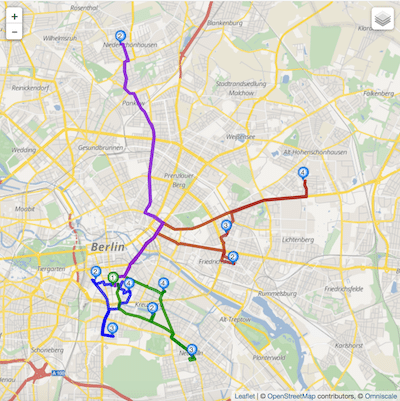
Load balancing in the context of vehicle routing problems is a way to achieve a more evenly distribution of jobs or activities over your drivers’ routes. There are a number of reasons to balance load. The most obvious ones are resource utilization and fairness. Why do we need a blog post for this? Why aren’t […]
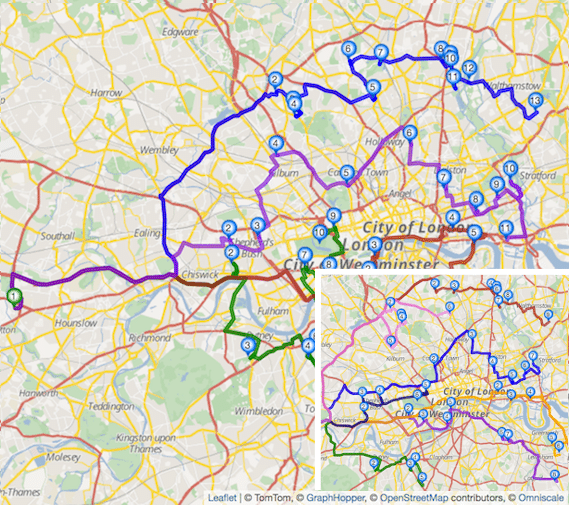
We are happy to announce our new product: time-dependent route optimization. To illustrate what this actually means, let us assume we have a number of drivers who need to serve 40 customers in London within a time window of 2 hours. All drivers start from the airport London Heathrow and do not need to return […]
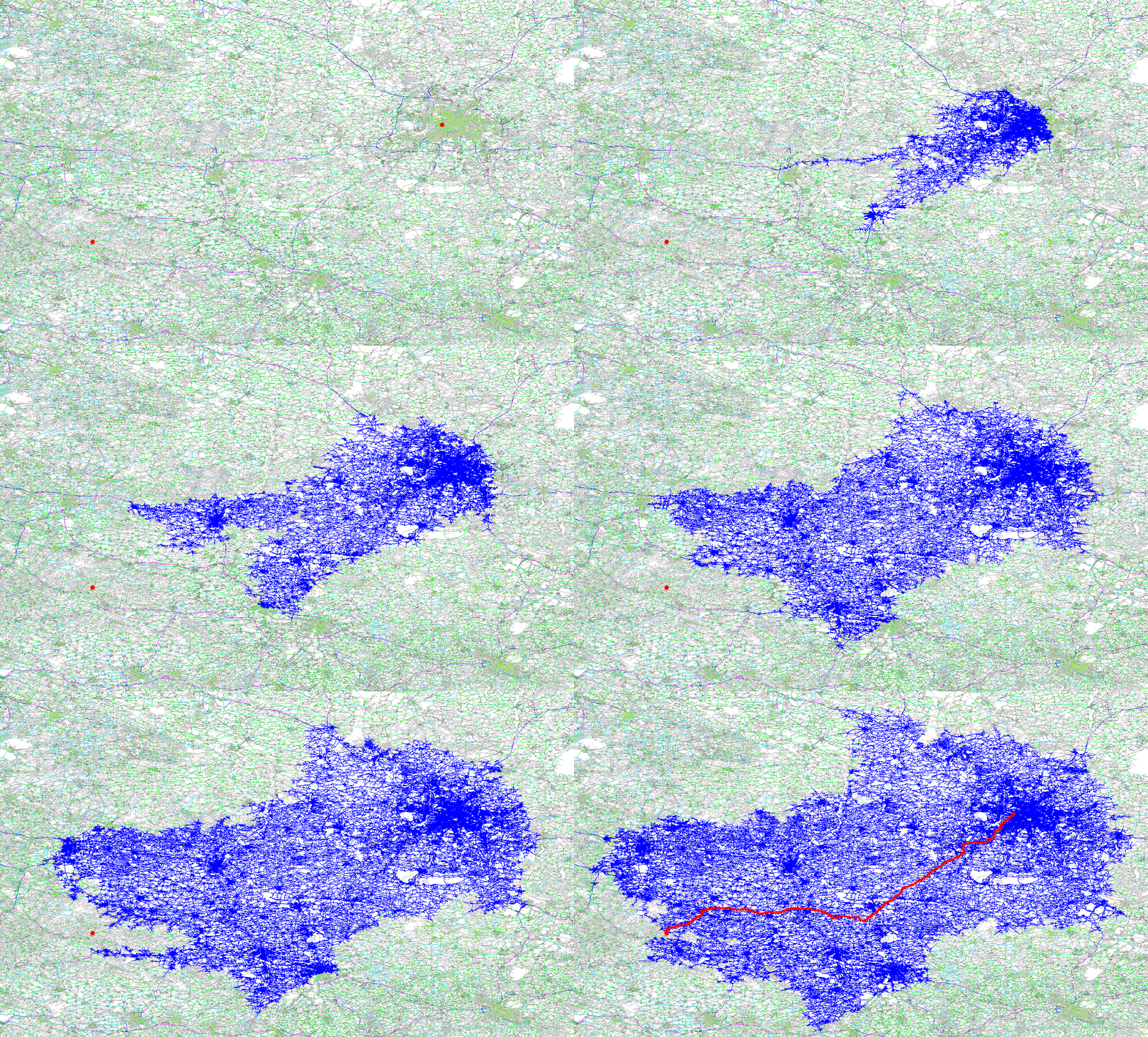

Introduction In this tutorial we are going to show you how to model a vehicle routing problem with vehicles that can have multiple return trips to the depot or hub.For example, let us assume you have 2 drivers that have a car much like the one on the figure below. It has an electric motor […]
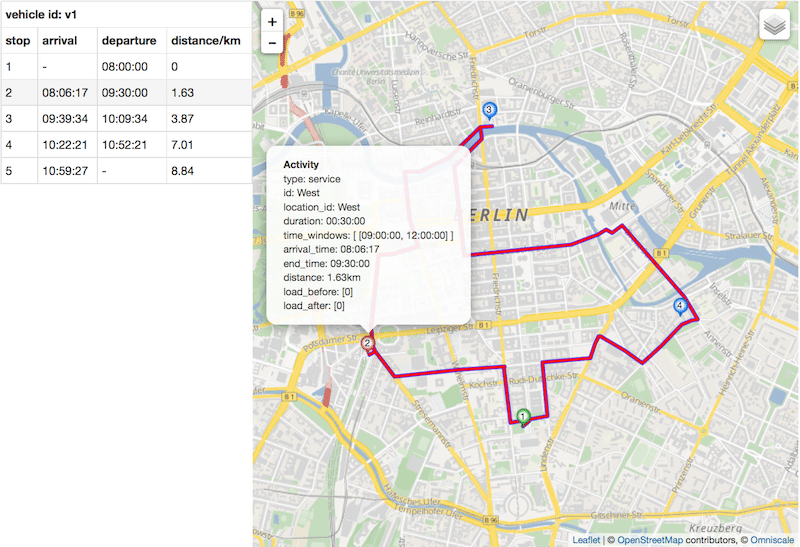
Every optimization requires an objective ie. a goal to which the results should be optimize for. Here, we want to illustrate the differences between two objectives: min transport time and min completion time. Using the GraphHopper Directions API the specification of these goals is as simple and intuitive as the following json snippets: or Transport […]
